
By Sõzarn Barday
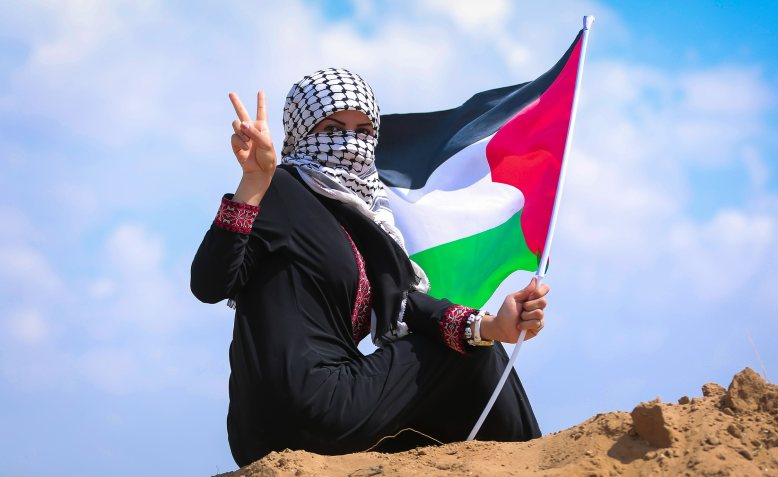
Among those most deeply affected by the ongoing crisis in Palestine are women, who carry a burden shaped not only by war and occupation but by the narratives imposed on them from outside. Their suffering is not only physical and psychological — it is also misrepresented. For years, Western societies have insisted that women who dress modestly, who wear hijab or abaya, are trapped by their own traditions. This paternalistic view has long been used to justify foreign policy positions, military interventions, and a sense of cultural superiority.
But in Palestine, this argument collapses. The women once labelled as “needing liberation” are now enduring some of the most severe violations of international law, not because of their cultural practices, but because they live under an occupation that strips them of rights guaranteed to them in every major human-rights instrument.
The Law Is Clear — The Reality Is Not
International humanitarian law places explicit obligations on the treatment of women in conflict.
Under Article 27 of the Fourth Geneva Convention, women must be protected from violence, humiliating treatment, and harm. Common Article 3 prohibits outrages upon personal dignity. Additional Protocol I recognises the need for special protection during pregnancy and childbirth. And under international human rights law, including CEDAW, Palestinian women are entitled to healthcare, education, dignity, and safety.
But these legal promises remain unenforced. Pregnant women are delayed at checkpoints to the point of medical emergency. Mothers search for their children under collapsed homes. Girls face severe movement restrictions that affect education and mental health. Women are displaced repeatedly with no access to stable shelter, food, or medical care. These are not cultural issues — they are political conditions, maintained in defiance of international law.
Modesty Was Never the Oppression
The Western narrative that once scrutinised the clothing of Muslim women now seems remarkably quiet as these same women face life-threatening violations. The obsession with hijab and modesty has always been a convenient distraction, a myth that allowed Western commentators to feel morally superior without confronting the violence carried out — or enabled — by their own governments.
Modesty is not oppression.
Occupation is.
Blockade is.
Impunity is.
Palestinian women are not oppressed by the fabric on their bodies; they are oppressed by the systems of power that decide whether they can cross a checkpoint, access a hospital, or keep their children safe.
Women as Witnesses, Leaders, and Survivors
Despite these realities, Palestinian women are not passive figures in a geopolitical story. They are lawyers documenting violations, doctors treating the injured under bombardment, journalists collecting testimony for future courts, and community organisers creating lifelines where institutions have collapsed. Their resilience is not symbolic — it is a form of legal and historical record. Every checkpoint birth, every denied medical referral, every home raid is evidence of a broader system that fails to protect them.
A Narrative the World Must Finally Confront
The tragedy is not only the suffering of Palestinian women, but the persistent misreading of their lives. The same Western governments that once claimed to speak for these women now refuse to speak to their suffering. The same societies that policed their clothing now avert their eyes from the violations of their rights.
If the global community is genuinely committed to women’s rights, it must move beyond cultural assumptions and confront legal responsibility. This means recognising Palestinian women not as symbols in a debate about modesty, but as human beings whose internationally protected rights are being systematically denied.
The Real Question
The question has never been whether Palestinian women are oppressed. The law, and the reality on the ground, make that clear.
The question is why the world has chosen to focus on how Palestinian women dress — instead of defending the rights they are legally owed, and urgently need.
Sõzarn Barday
Sõzarn Barday is a writer and attorney based in South Africa and has a particular interest in human rights within the Middle East. The views expressed are her own.