

Western recognition of Palestine signals a shift in rhetoric, shaped by Palestinian steadfastness and global solidarity, but remains contested in meaning.
On Sunday, the United Kingdom, Canada and Australia recognized the State of Palestine, a step many perceive as a reversal of a historical injustice that lasted decades. Other countries are expected to follow, including France and Portugal, among others.
Much can be read into these decisions, especially if we examine the official reaction of Israel. “Calls for a Palestinian state threaten our existence and constitute an illogical reward for terrorism,” said Israeli Prime Minister Benjamin Netanyahu.
Among the supporters of Palestine, however, these recognitions are understood in different ways. Some believe that the steps have arrived too little, too late, suggesting that symbolic recognitions are meant to distract from the utter failure of these traditional supporters of Israel to stop the genocide in Gaza or to hold Israeli leaders accountable for the extermination of the Palestinian people.
This claim is supported by facts. For example, the insistence by the leaders of these governments that Israel has a “right to defend itself,” faulting Palestinians for the resistance, and imposing conditions on their acceptance of the two-state solution.
Others, especially those who support the one-state solution, argue that the two-state solution is not possible to begin with, and that breathing life into it would do nothing but give Israel the time it needs to complete its extermination of Gaza and annexation of the West Bank.
A third group is keen on seeing the silver lining, arguing that such recognitions are still vital, for they represent an acknowledgment of the Palestinian people’s right to self-determination and a defeat to Israel’s attempt to marginalize Palestine and the Palestinians from the global agenda.
All of these claims have a great deal of legitimacy and must be acknowledged as proper analyses and valid concerns.
Here are some points that must be taken into account as we reflect on the broader meaning of these recognitions:
One, the recognition of a Palestinian state is a complete breakaway from the notion that an independent Palestine can only happen through negotiations between the Israeli occupation and the occupied Palestinians. This oft-repeated line has defined Western foreign policy on the subject.
Though no negotiations have taken place for decades and Israel has been given the green light from the US to annex what remains of occupied Palestine, Western countries repeated the same line time and again. Thus, these recognitions are a clear departure from past foreign policies, as envisioned by Washington and Israel.
Two, the UK’s recognition of Palestine, although it came after long diatribes of conditions and often demeaning language, is particularly significant. It was the UK’s Balfour Declaration of 1917 that planted the seeds, which, three decades later, led to the establishment of Israel on the ruins of the ethnically cleansed Palestinian homeland. This historical context is particularly critical as well.
Three, the recognitions of Palestine underway were not charitable acts by Western governments: they were the culmination of events that started on October 7, the genocide in Gaza, and the legendary Palestinian steadfastness.
While many are busy thanking governments for their seemingly kinder approach to the Palestinian struggle, they are forgetting that these steps would have been virtually impossible if it were not for the Palestinian people themselves.
Four, even then, these recognitions would still be difficult to obtain if it were not for the popular mobilization in Western countries that carried and amplified the voice of Palestinians in Gaza and beyond.
Note how the early recognition of Palestine in Spain, Norway, Ireland and Slovenia in May 2024 took place in societies where popular mobilizations and solidarity are historically rooted. The same logic applies to all the new recognitions as well. This is proof that civil society is a political actor able to bring about change when it is needed most.
Five, a clear distinction has to be made between calls for mere “solutions” and the broader meaning of recognition. Israel has made the two-state solution impossible anyway, but what truly matters here is that, after years of marginalizing the Palestinian cause and years of Arab normalization with Israel at the expense of the Palestinians, Palestine is now back on the agenda as a main item for the international community.
Instead of engaging in side conversations about solutions and the like, it is incumbent upon us to utilize these movements to hold these governments even more accountable to international law and to the collective wishes of their people, so that they may impose sanctions and even sever relations with Israel, a pariah state that is on a relentless quest to destroy the Palestinian people in whole or in part — the very definition of genocide.
(The Palestine Chronicle)
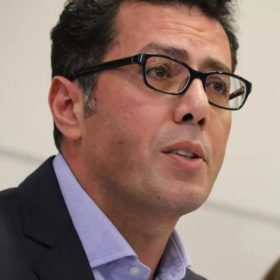
– Dr. Ramzy Baroud is a journalist, author and the Editor of The Palestine Chronicle. He is the author of six books. His forthcoming book, ‘Before the Flood,’ will be published by Seven Stories Press. His other books include ‘Our Vision for Liberation’, ‘My Father was a Freedom Fighter’ and ‘The Last Earth’. Baroud is a Non-resident Senior Research Fellow at the Center for Islam and Global Affairs (CIGA). His website is www.ramzybaroud.net