

The horror does not cease for a single moment. Evil crosses all limits. The exterminating angel extends his hand over Gaza. He is a demon-possessed angel who sows death and destruction, leaving the ground strewn with corpses and debris in his wake. Nothing can quench his thirst for revenge. Fierce and relentless, he rages on the underdog and the unarmed. His child-killing army sheds innocent blood, bombards and guns mercilessly.
Israel’s war against the Palestinian people is a war of terror, a genocidal war. Not only is a daily carnage being perpetrated in full view of all, but also a cultural genocide.
Israel’s war against the Palestinian people is a war of terror, a genocidal war. Not only is a daily carnage being perpetrated in full view of all, but also a cultural genocide. Because it is not just a question of exterminating a civilian population: it is above all a question of annulling its identity, of erasing all traces, all presence of it. It is a matter of denying the other until erasing him from the face of the earth. That is why Israel bombs everything: houses, apartments, schools, hospitals, shelters, mosques, universities. This is a war expressly against civilians. The targets of the attacks are civilians, regardless of their age or condition: ordinary people, UN employees, doctors, journalists, academics, teachers, students; men, women, children, the elderly. Among the victims there are also poets. Poets also die in wars.
Just in these terrible days of so much innocent death, days of murdered poets, I seek consolation in poetry. I share three poems from Gaza by deceased Palestinian authors. The first two were written while Zionist bombs were falling incessantly and their authors fell shortly after; the last one is from years ago.

Hiba Kamal Abu Nada
Hiba Kamal Abu Nada, a 32-year-old Gazan poet and novelist, died in the midst of the Israeli bombardment of the city of Khan Younis in Gaza. He was educated at the Islamic University of Gaza, today destroyed by the Israeli army, like all other Gazan universities. She was a biochemist and nutritionist by profession. A day before his death he wrote, “If we die, know that we are satisfied and steadfast, and tell the world, in our name, that we are righteous people/on the side of truth.” His last text, written that same day, reads:
“The night in the city is dark
save for the glow of the missiles
silent,
save for the sound of shelling
terrifying,
save for the reassuring promise of prayer
black,
save by the light of the martyrs
Good evening.”
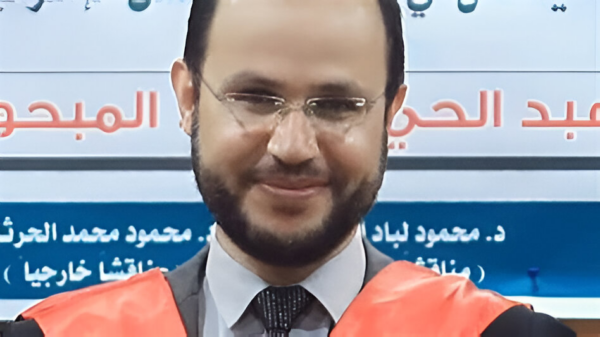
Refaat Alareer
Refaat Alareer, a 44-year-old renowned Palestinian poet and academic, was killed in December 2023, along with other members of his family, in the Israeli airstrike on the house where he was taking refuge in the southern Gaza Strip. He was a professor of English literature at the Islamic University of Gaza. He was also co-founder of the academic-cultural project “We are not numbers”, an initiative that links young writers from Gaza with foreign authors to learn to write in English about their environment and their lives.
In one of his last interviews, at the beginning of the war, Alareer denounced: “We know that it is very gloomy. Very dark. There is no way out. If there is no water, there is no way out of Gaza. What should we do? Drown? Committing mass suicide? Is this what Israel wants? And we’re not going to do that. The other day I was telling someone, a friend, that I am an academic. Probably the hardest thing I have at home is an Expo scoreboard. But if the Israelis invade, if they storm us, if they charge at us, if they open door to door to slaughter us, I’m going to take that marker and throw it at the Israeli soldiers, even if that’s the last thing I can do. And this is everyone’s feeling. We are helpless, we have nothing to lose.”
If I Must Die was his last poem, written under the incessant and ferocious Israeli bombardment. Actor Brian Cox recites it admirably in a video circulating on social media. I transcribe it in a bilingual version.
“If I have to die
You have to live
To tell my story
To sell my stuff
to buy a piece of fabric
and some strings
(that is white with a long tail)
for a child somewhere in Gaza
As she looks into the sky
Waiting for his father who went on fire
And he didn’t say goodbye to anyone
not even of his own flesh
not even of himself
See the kite, the kite you made for me
Flying overhead
And think for a moment
That there’s an angel there
Returning the love
If I have to die
That brings hope
that it is a story.”
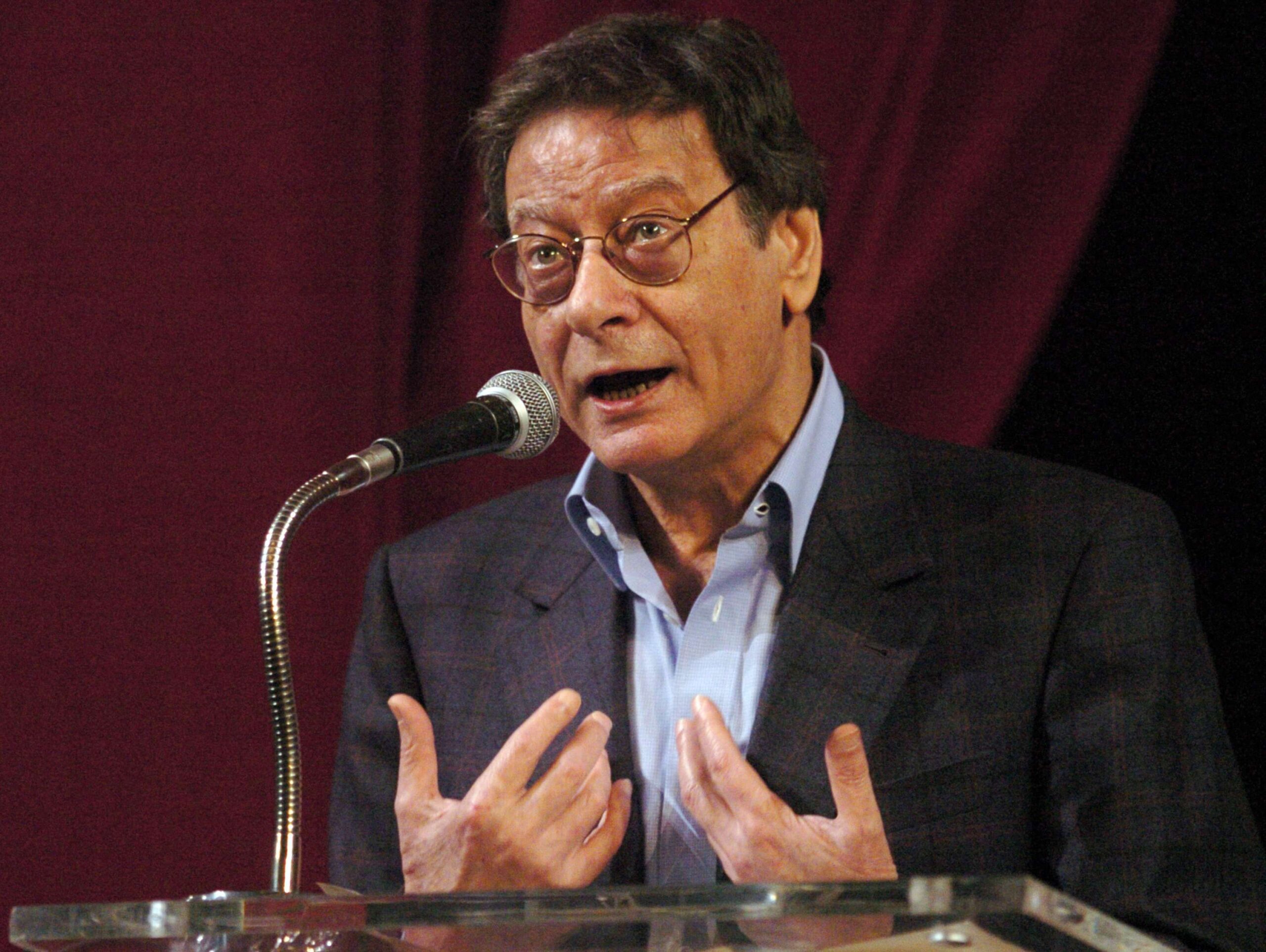
Mahmud Darwish
Confession of a Terrorist is a poem by Mahmoud Darwish, the Palestinian national poet, who died in 2008.
“They occupied my country,
They drove out my people,
they annulled my identity.
And they called me a terrorist.
They confiscated my property,
They uprooted my crops,
They demolished my house.
And they called me a terrorist.
They legislated fascist laws,
They established apartheid.
They destroyed, divided, humiliated.
And they called me a terrorist.
They killed my joys,
They hijacked my hopes
They handcuffed my dreams.
And when I rejected all the barbarities
and I decided to defend myself, they…
They killed a terrorist!”
Source: Acento. Three Poems from Gaza – Twist IslamophobiaTwist Islamophobia